


The Katerini Laboratory Center in Ethiopia within the framework of the IMPACT Project – ERASMUS+ (https://impact-erasmus.eu)
IMPACT: Raising public awareness on migration and climate change through collaboration and teaching
Study Visit to Ethiopia: March 12-15, 2024
Topic: In Africa, especially in Ethiopia, there are various forms of migration that affect the quality of life of the population. One form is directly related to the climate.
Questions: How is climate a factor that explains migration to a large extent? Why is migration constantly increasing in Ethiopia? Why is migration plunging Ethiopia into critical situations for its future?
These are general questions that require different institutional meetings in order to find logical answers. If Europe wants to be able to accurately represent the reality on the ground, it must compare views and have direct exchanges with relevant actors who have studied the situation in Ethiopia.
What is the goal? The aim is to study the situation for the construction of an educational tool for raising awareness about climate-related migration.
Target audience? Secondary school students in Europe.
How? Through a collaboration of school members and associations from 5 different countries (Ethiopia, Greece, Spain, Italy and Belgium). Specifically, 4 international meetings will be held between the project members (in Ethiopia, Italy, Belgium and Spain). These will be supported by preparatory meetings (webinars), visits to institutions and specific collaborative tasks for the implementation of the teaching package.
1st – day: Tuesday 12 March 2024
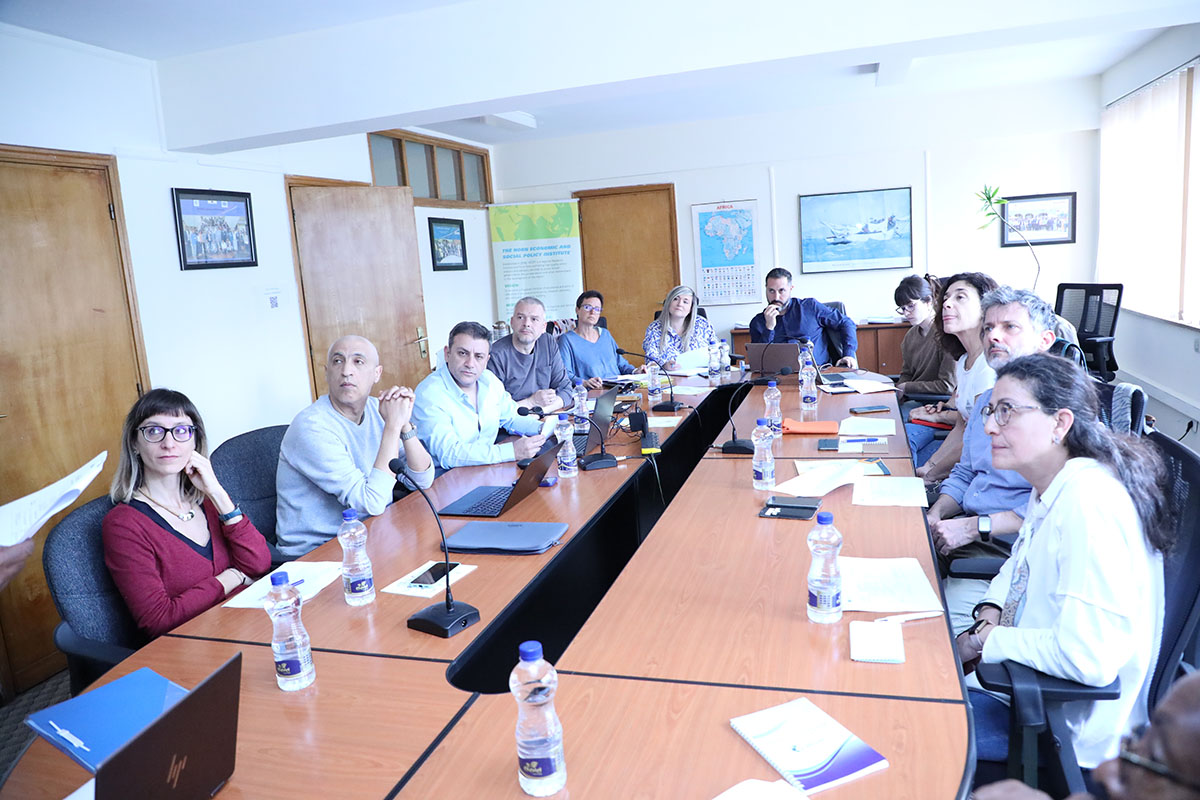
Our meeting in Ethiopia starts on Tuesday 12 March 2024 in Addis Ababa. There, we are welcomed by HESPI (Economic and Social Policy Institute), a non-governmental institution that conducts research on sustainable development. HESPI is also our direct partner in the project, representing Ethiopia in the various meetings in Europe. We follow Daniel, a member of HESPI, who will take care of the program of our visits and meetings.
HESPI presents us with the situation in Ethiopia: on the one hand, the country needs a global intervention on migration and on the other hand, given the increase in population, solutions must be found to create jobs and reduce the poverty rate. In general, HESPI seeks to improve the economic and social management of the country.
In Ethiopia, there are more than 120 million inhabitants and 70% of the population is considered “young” (under 30 years old). Today, the country is facing a worrying situation: the population is migrating and leaving the country more and more every day!
Why is this happening? If we consider that most of the country’s economic resources come from agriculture, it is easy to understand that climate change is proving to be the main factor in migration. 70% of the land is arid and the country is affected by both drought and floods. As a result, people are leaving the country.
In addition to climate-related migration, there are internal population movements that also affect the quality of life of citizens, which leads to conflicts! This situation is unknown at the international level, but Ethiopia is experiencing violent and armed situations mainly in the north of the country. Migrations are therefore also taking place to the South.
Finally, HESPI points out that the main objective of our educational work is to raise awareness among young people in Europe about the role of climate as a factor in internal and external mobility in Ethiopia.
Without real awareness, it is certain that migration will continue to increase simply because the population is becoming increasingly vulnerable to climate change.
Day 2: Wednesday, March 13, 2024
Ministry of Women and Social Affairs:
What is the government doing about the HESPI findings?
According to the Ministry of Women and Social Affairs, whom we met as the first interlocutors, the government is aware of the situation and is actively involved in finding solutions to the country's intense migration.
It turns out that the government is trying to reduce migration by creating jobs for young people as well as developing a "green" policy related to ecology. Indeed, the implementation of regulations related to climate change would protect and hope for
a better future.
Επιπλέον, το Υπουργείο υπογραμμίζει τη σημασία της προώθησης της νόμιμης μετανάστευσης και της συμμόρφωσης με τα υφιστάμενα πρωτόκολλα. Ο πληθυσμός μεταναστεύει σε επικίνδυνες συνθήκες με κίνδυνο της ζωής τους όταν δεν χρησιμοποιούν τις νόμιμες οδούς.

The government also dedicates part of the country's economy to social reintegration by providing education (mainly commercial, technical or related to the catering sectors) in relation to the citizens' choices to reduce other types of migration, those characterized by "economic migration" (without being directly related to the climate). In this context, the country must also address the failures of migration and the reintegration of the population can only be done with social assistance (housing, etc.).
Despite the government's efforts, the situation reveals great concerns for the future of the country:
- The jobs created are INSUFFICIENT.
- The jobs available do not match the REQUIREMENTS of young people (for example, there are no jobs for engineers).
- The country needs ENTREPRENEURS to stimulate the economy and attract investors in specific sectors.
It should be noted that there are more than a million refugees in Ethiopia (from Somalia or Sudan). These migrants are often irregular and half of them are women! They are looking for domestic work in other places (example: in Yemen).
This is because climate is the main factor in migration! Due to droughts and floods, the population has limited access to resources (water, food, etc.).
- The Ethiopian Youth Federation:
While the government seems to be taking action on migration and climate, other organizations are mobilizing in Ethiopia to contribute in some way to improving people’s lives. So, we continued our day at the Ethiopian Youth Federation. It is an association founded in the 2000-10 decade and tries to raise awareness among young people about the concept of migration through various means: renovating the area to make young people aware of their ecological responsibilities and allowing them to utilize public spaces by sorting waste.

The main channel through which the association tries to act is COMMUNICATION. Communication with young people in the countryside but also through exchanges. The Federation aims to develop international relations to raise awareness and help young people to address climate concerns.
For example, the Federation collaborated with the Ministry of Environment to allow tree planting and the creation of a park (by and for youth). In addition, it collaborates with the Ministry of Justice to help repatriate illegal immigrants.
More generally, the Federation also links up with international partners (e.g. “Safelight”, “Synergy”, etc.) to combat unemployment in Ethiopia and to enable young people to have access to legal employment. Indeed, there is an imbalance between the diplomas issued and the job offers in Ethiopia. In addition, the Federation provides young people with the opportunity to approach the world of work through volunteering.
How does the association work with youth? It conducts interviews with young people who contact them to identify their skills or educational needs. It offers different tools (school equipment, etc.) but also adapted training so that young people can achieve a certain level of education and be supported in their job search. Reducing gender inequalities in population management is another important objective of the Federation.
The Federation also explains the urgent need to reconsider the potential of rural areas differently, which is a real problem for young people. Agricultural activities are becoming unproductive due to the climate and this encourages young people to leave to retrain and find other profitable activities to support themselves or their families. Therefore, it is necessary to develop a policy on ecology and to make young people aware of the situation. This point is more relevant to our own educational plan.
Finally, the Federation calls on Europe! If actions are taken to provide temporary assistance, the Federation now insists on a more adequate way of supporting Ethiopia: to find out what the country needs in relation to the actions that the Federation has taken! They ask for a more appropriate support that is directly related to the field studies that have been carried out rather than a spontaneous aid.
- The Embassy of the Netherlands:
We also had the opportunity to visit the Dutch embassy. We realized that Europe is actively working in Ethiopia to combat migration and develop climate-related actions.
Thus, the Dutch Embassy has created a “PROSPECT” program that focuses specifically on migrants. This program was organized in cooperation with 8 different countries.
The Embassy’s concerns are mainly based on four pillars of migration:
- Education (most refugees or migrants do not go to school)
- Integration (being part of society)
- Social protection
- Well-being

The Embassy stressed that “migrants” and “refugees” should not be confused.
We asked the Embassy what they thought would be the main topics we would discuss with our young people in schools in Europe regarding migration and climate in Ethiopia.
This led us to think about several points:
- Developing tools to raise awareness among young people about the three factors driving migration in Ethiopia: 1) climate, 2) internal territorial conflicts and 3) economic reasons. It is important for Europe to understand that the first factor is climate and not economics.
- Encouraging young people to ask themselves about migration in another direction: why don’t some Ethiopians leave? Because in reality, those who don’t migrate are the majority of the population! There are attachment factors (such as family) and resource-related reasons.
- There is a misconception: it is wrong to believe that the majority of migration is organized towards Europe! In fact, most migration in Ethiopia takes place within the country or in Africa.
It is important to understand why people leave, but it is equally important to ask the question: "Why do many migrants return? There are many reasons and the points of departure and return vary.
- Answer the question: "How will you reintegrate into your country if you have been deported?"
- Explore the difference between legal and illegal migration.
- African Union:
The African Union opened its doors to us. It is a large organization with about fifty members. It fights for the development of social measures linked to human rights. There is also an economic department that works to find solutions to climate issues. The foundation points out that there are actually vulnerable areas in Ethiopia, or at least, more vulnerable areas, and they are the ones that need help because the population cannot find work there. Even if climate is a cause of migration, the African Union tells us that we must also understand that migration has an impact not only on the region, but also on the environment! It is also important to understand the difference between 3 types of situations: -Omnesia - Refugees - Illegal immigrants

Depending on the status in question, the problems encountered by some will be dealt with by a Ministry, while others should be referred to national heads of state.
However, when it comes to migration, the AU is trying to develop a local policy, as well as measures to protect migrants and provide assistance.
They also stress the importance of conducting research! If someone wants to change things, they should be able to prove what is needed. And to produce evidence, research should be carried out, statistics should be gathered and data should be collected! Without this, it is very difficult to defend oneself and find help.
What should we warn our young people in European schools, according to the AU?
- The fact that climate change affects people's everyday lives. How are people's lives affected by climate change? How are cities affected?
- The fact that there is a legal way to do things when it comes to immigration. Systematic immigration exists.
- The fact that there are misconceptions about immigration. Knowing how to get rid of them and seeking information in the field to form a fair and unbiased opinion.
- When it comes to immigration, we are talking about human lives! People make their choices, even when faced with rules and laws. They can choose to act one way or another. In other words, it is difficult to always have control over people. People believe that banning immigration prevents it. This is simply not true. Quite simply because the issue of immigration is above all HUMAN LIVES. And since the dawn of time, people have moved and migrated by nature. Would it be possible to prevent or control this phenomenon completely?
Day 3: Thursday, March 14, 2024
UNECA :
The last two working days were organized around visits to various associations that ultimately revealed an observation: in Ethiopia, there are many independent initiatives from each other, however they work for the same reasons. To improve the quality of life of Ethiopians affected by the climate and who migrate.
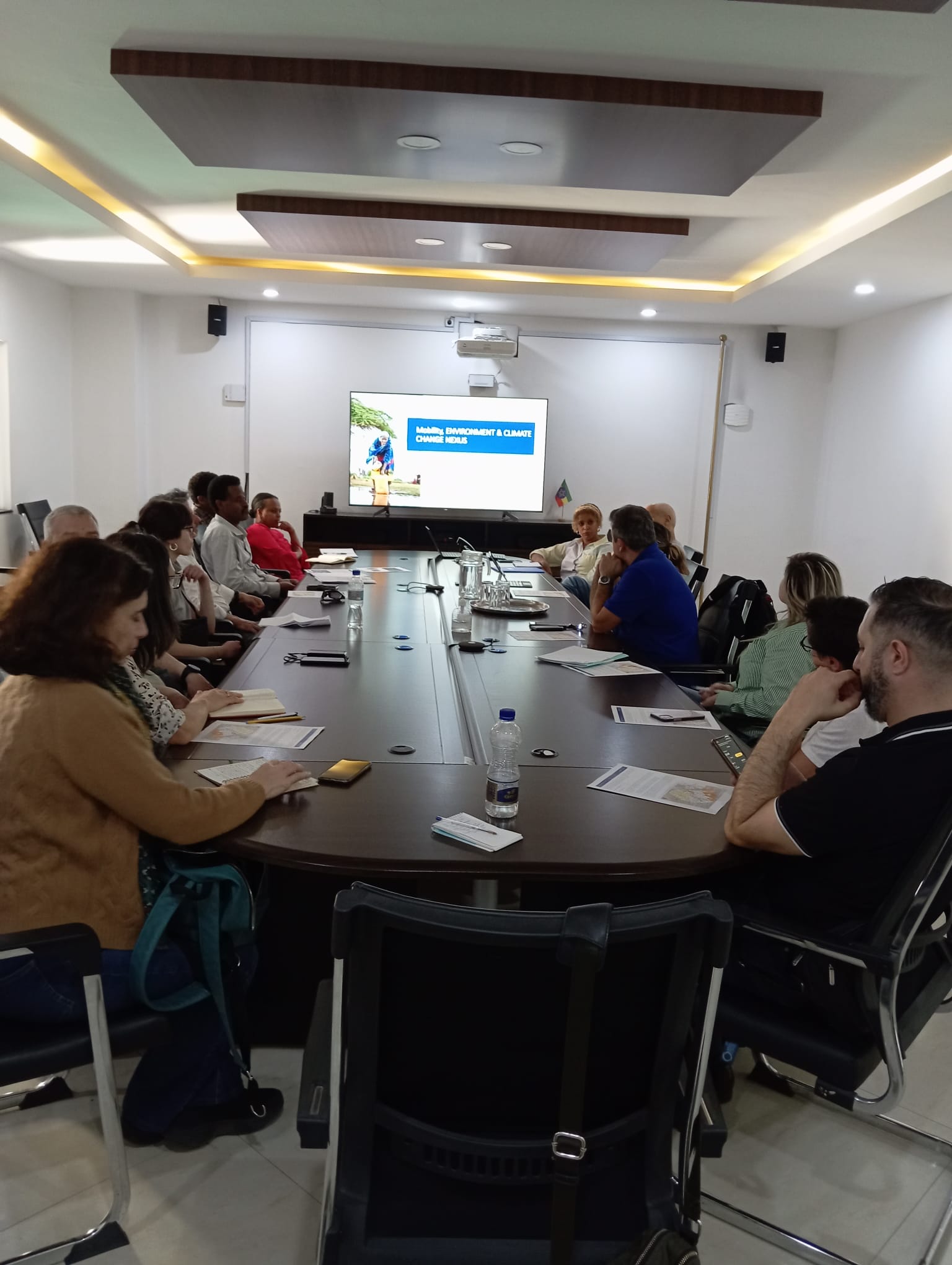
More specifically, UNECA aims to develop actions around a policy of social inclusion and the fight against poverty.
There are 6 themes around which they build their actions:
- Population movement and reintegration
- Women and gender inequalities
- Identity. When young people migrate, they do not have a legal identity because they are not registered anywhere. UNECA wants to promote the legalization of identity.
- Migration regulation (development of a mobility protocol)
- Health and disease management for migrants
- The issue of work related to migration
The types of problems they are trying to address tell us one thing: migration puts people at risk and Europeans are not sufficiently aware!! This highlights the fact that insecurity is prevalent in Ethiopia.
We urgently need to modernize agriculture and find alternatives!
This means finding sustainable means of production.
UNDP (United Nations Development Programme):
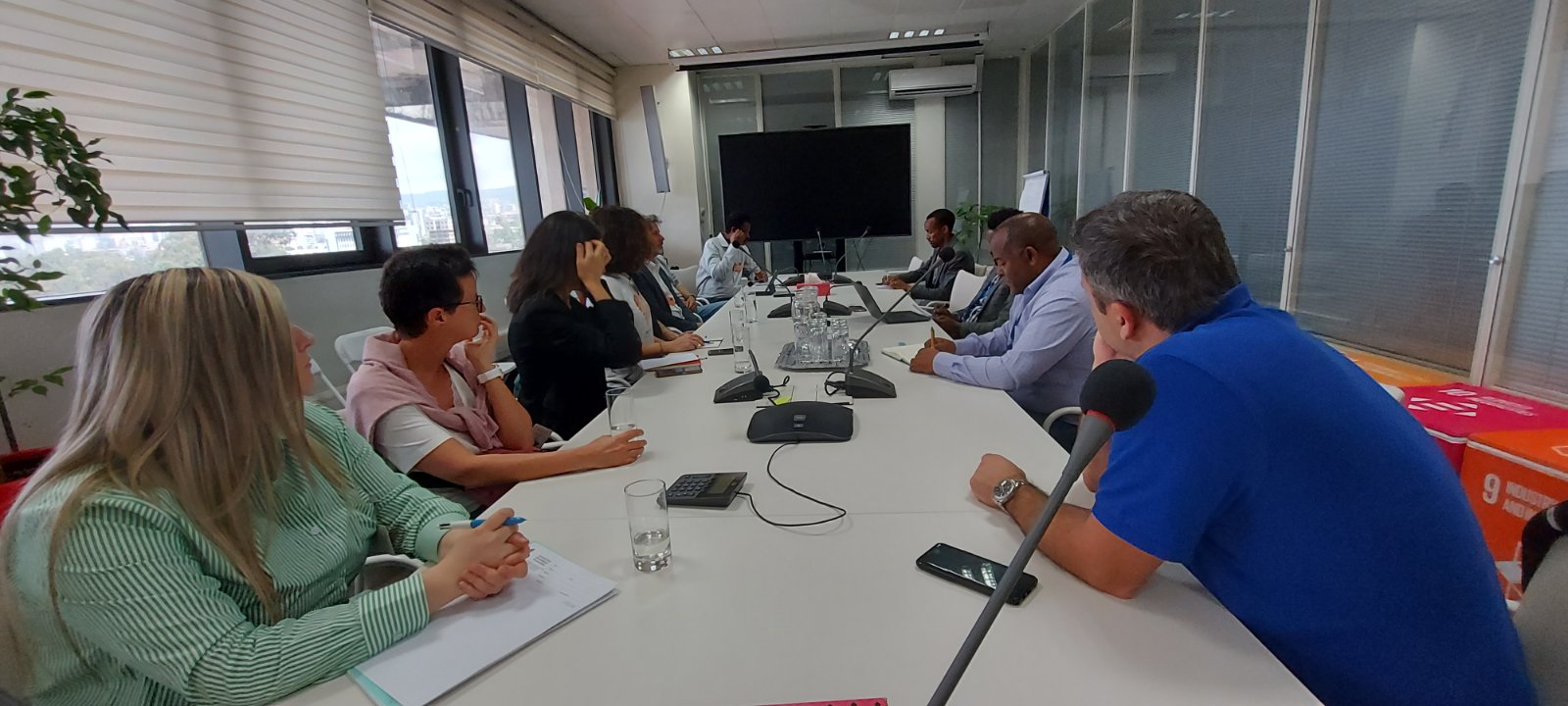
More focused on climate concerns, UNDP is working on various projects related to:
- Energy (renewable energy sources more specifically)
- Climate change adaptation
- “Sedentary agriculture” (integrated agriculture)
- Drought/natural disasters/floods
This association is committed to making a difference through schools.
They invite us to ask our young Europeans about:
Why does an African migrant choose to go to Europe? Some risk their lives and put their families at risk to do so. Is this necessary to earn money?
What goes on in the head of a migrant? It is important to know that they have false ideas about the life that awaits them if they migrate!
In Ethiopia, false ideals are planted in their minds, which make them believe in a better, easier life and make them believe that it is “worth it” to risk their lives. Peer pressure (family, etc.) is also a factor that encourages people to leave.
- How can Europe effectively help Africa to make better use of its own resources? Africa lacks engineers and people who can think about this. But it is obvious that creating jobs would help solve the problem. In Ethiopia, for example, most of the population is young and, for now, they end up working in “shops”. By developing the skills of young people, Africa can have expectations of seeing some “entrepreneurs”.
- How can a climate of peace be created in specific regions? Ethiopia is a transit country in Africa. Therefore, it is at the epicenter of migrants from other countries. Somali refugees, for example, exist in Ethiopia. In addition, there is internal migration. All this helps us to understand why conflicts are sometimes inevitable.
- How can one invest for the climate? In Ethiopia, there is little irrigation capacity on the ground, but plenty of infrastructure capacity! What is missing is the necessary investment in flood control.
The association points out that it is actually impossible to prevent climate change. We cannot prevent the rain! And on top of that, we need to develop PREVENTIVE measures that will help us prevent and not suffer from climate change
Visiting a primary school:
In Ethiopia, school is compulsory from the age of 6. In rural areas, the government ensures that children are rounded up and sent to school. A child who is not in school is exposed to abuse (work, sex, etc.).
Children attend school on average until the age of 18. School starts around 8:30 a.m. and ends at 3:30 p.m.

Furthermore, most lessons are taught in English from the age of 6! This results in English being widely spoken.
There are 3 types of schools:
- Government schools (free)
- Public schools
- Private schools (a curriculum is imposed, but the school has a certain margin to hire teachers depending on the quality of teaching it requires).
The average salary for a teacher ranges between 7,000 and 10,000 birr (about 100 euros) per month! Salaries vary depending on the degree and the school.
At school, teachers are involved in raising awareness of climate-related issues:
- Trees and their importance for humanity and the planet.
- The impact of deforestation.
- Pollution.
- Water management.
These aspects are relatively undeveloped, and students learn about them mainly through books.
The children we met were welcoming, smiling, and warm-hearted. Yet their classrooms are rudimentary: a few benches, faded walls and floors, a white cloth on the wall, and a small table with a computer and projector for some teachers. Some classrooms don’t even have windows. In others, bars secure the window overlooking the playground.
A teacher, with a stick in hand, calls for class when needed.
- IOM :
We end our day with a meeting with the head of IOM.
This association focuses on the issue of mobility (internal/international/legal). According to the association, people migrate due to:
Conflicts, Climate, Social tensions
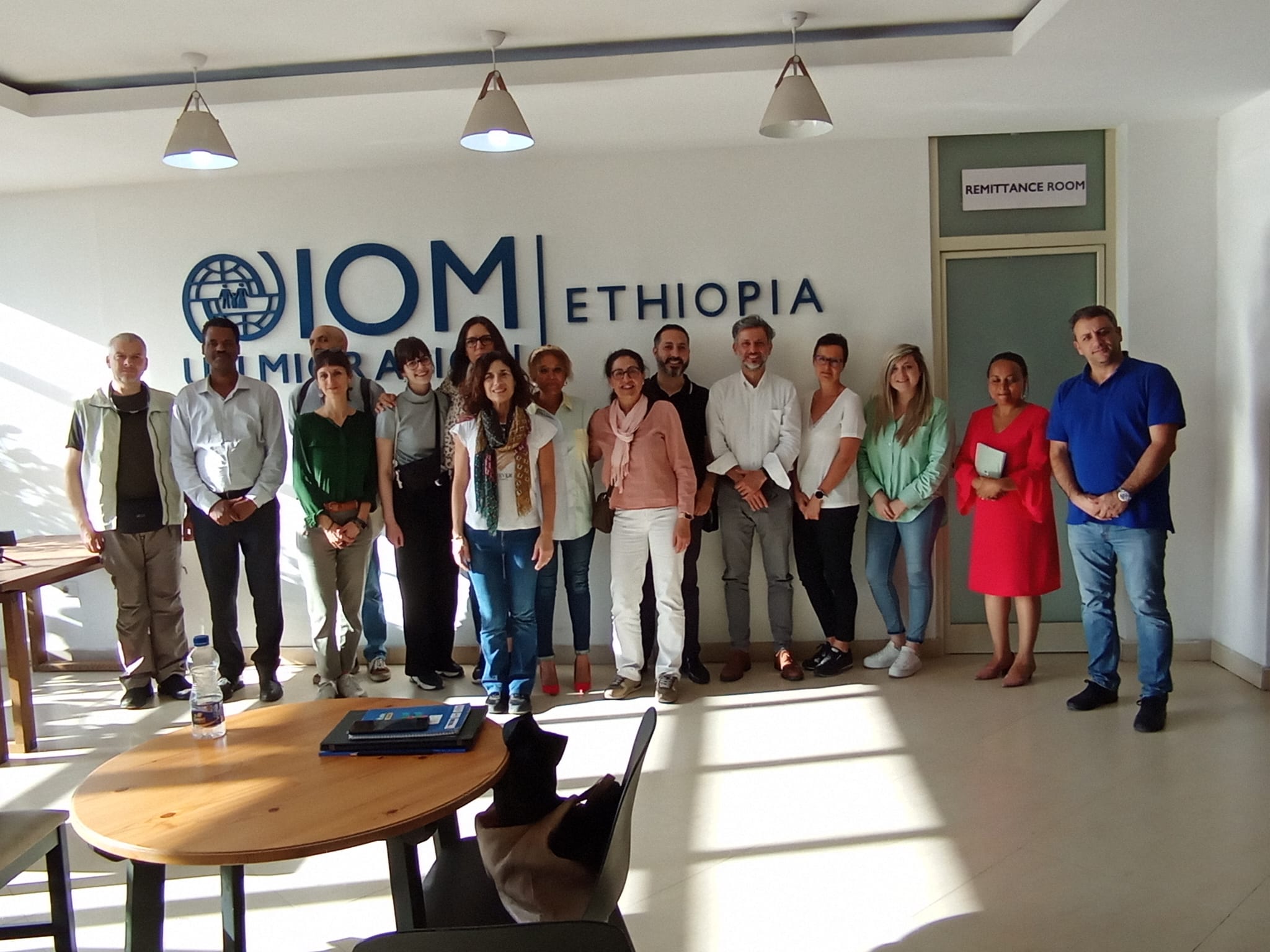
In this way, IOM helps migrants in a practical way. Whether they are forced to leave or choose to leave, it is not without risk to their health and life in general. IOM can be there to help them in the countryside, along the roads, or through the centers that have been set up to provide water, for example.
But IOM also acts against migration. For example, the association has built an irrigation canal to prevent flooding in some areas.
They also provide training to help people find jobs.
Migration is widespread and is linked to Yemen, Djibouti, Sudan and Somalia. However, border controls reduce the actual number of migrants.
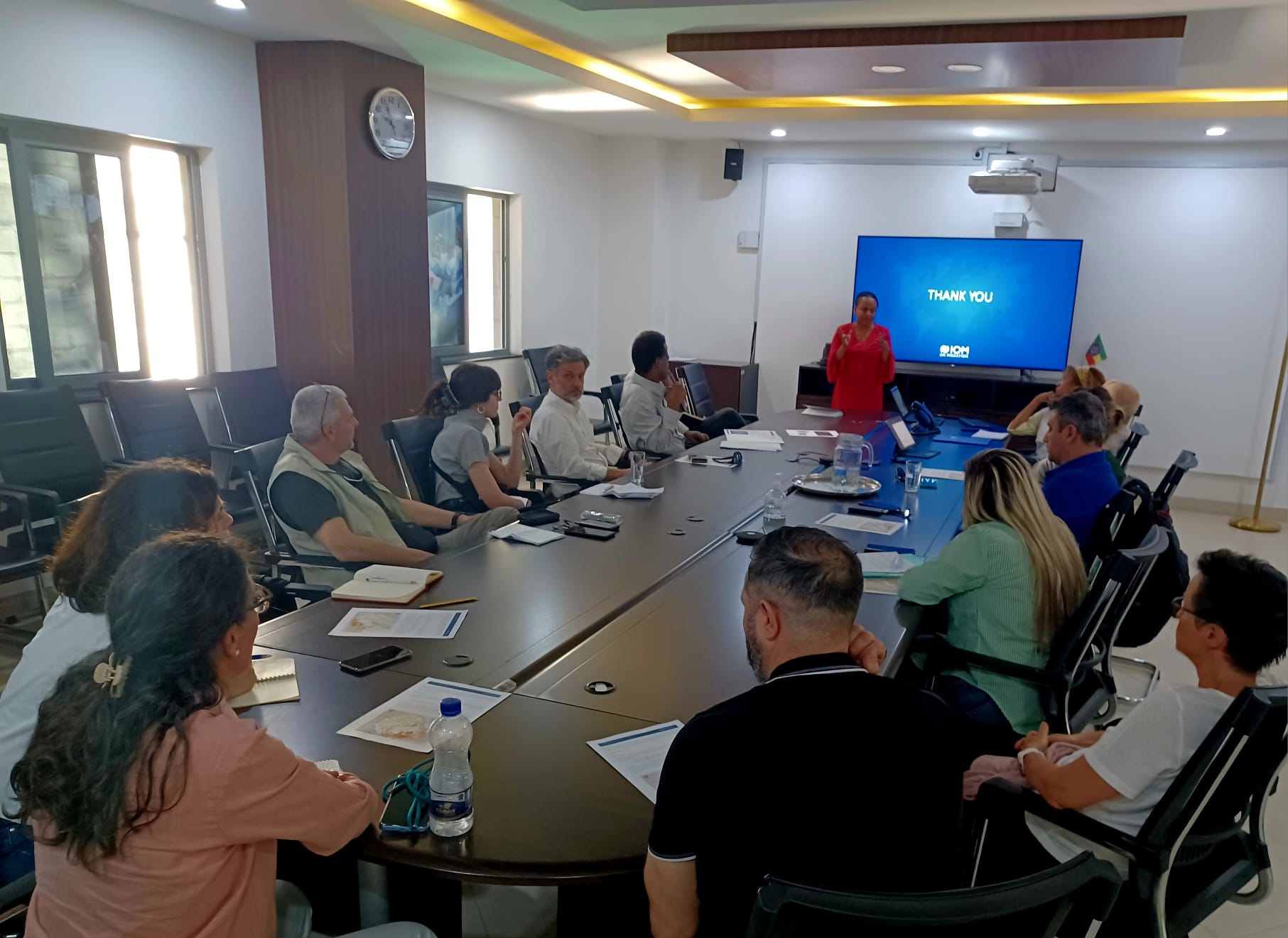
In any case, we must understand that explaining to people that they cannot migrate is pointless! For this to work, we must propose OTHER ALTERNATIVES to their situation. Due to poverty, an Ethiopian will take the risk to migrate, rather than face certain death.
That is why IOM offers alternative solutions: psychological support, medical assistance and education.
Day 4: Friday, March 15, 2024
The OWS Development Fund:
Our last day of work began with a meeting with the OWS Development Fund, a group that aims to address the following issues:
- Health
- Education
- Protection
- Agriculture
- Peace and Dignity

They also collaborate with some of the associations we visited (IOM, UA, etc.).
How is OWS involved in education?
There are children who do not go to school because of migration! The group fights against this. A child who does not go to school suffers various forms of abuse or may even be the victim of a forced marriage!
The association also provides laundry services and toilets. They use a saying for this, “I work for dignity”. They also carry out renovations to some infrastructure in schools.
OWS works in two ways to combat the phenomenon of migration.
By informing citizens that they play a role and have a share of RESPONSIBILITY by participating in aid projects.
Schools also play a role here. They offer to train teachers in certain subjects and provide access to various jobs. We need to rebuild a solid trust in education for the future.
Distribution of goods and aid in the field. The aim is to ensure that the population has access to a safer life. OWS also provides TECHNICAL SUPPORT.
- The AFM:
Our last meeting was held at the premises of the association “immigrants by necessity”. They mainly promote legal immigration and fight against illegal immigration, which they call “forced immigration”.
The main message of the association:
The AFM wants to draw our attention to the fact that, in its opinion, America and Europe are not saving the world! The members would like us to be more aware of the way we pollute the world, particularly affecting countries like Ethiopia. Europe and the United States should now consider Africa as a partner in jointly tackling climate change, while being aware of the reality in Africa.

This was the first face-to-face meeting (case study) of our Erasmus+ project team. The team will continue to work online and will meet again in October 2024 in Italy.
